
Festival of the Girl
18 October, 2025
RESILIENCE STEM outreach was really happening at Festival of the Girl (FoTG)!
RESILIENCE had a real adventure during the 2025 FoTG, meeting and educating the future generation of scientists (including world class biochemical engineers) who will develop and maintain the UK medicines manufacturing industry.
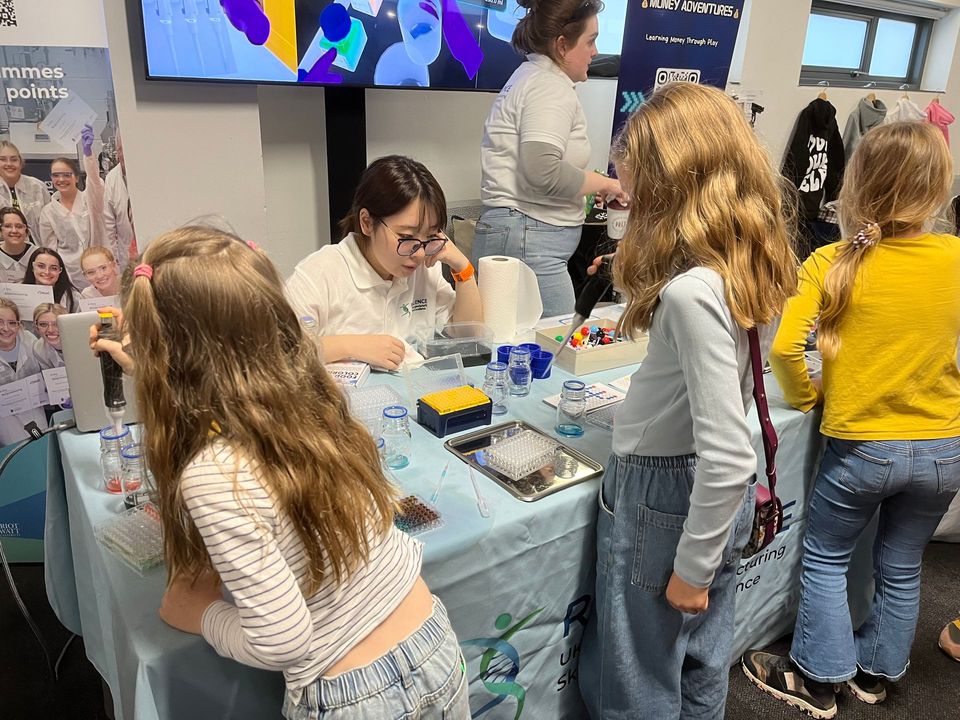
Our stand was one of the most popular, with children as excited about art, clay modelling, pipetting, and alginate gels as they were about our virtual reality. The festival took off at a fairly relaxed pace because the first session was prioritised for special educational needs and disabilities (SEND) children.
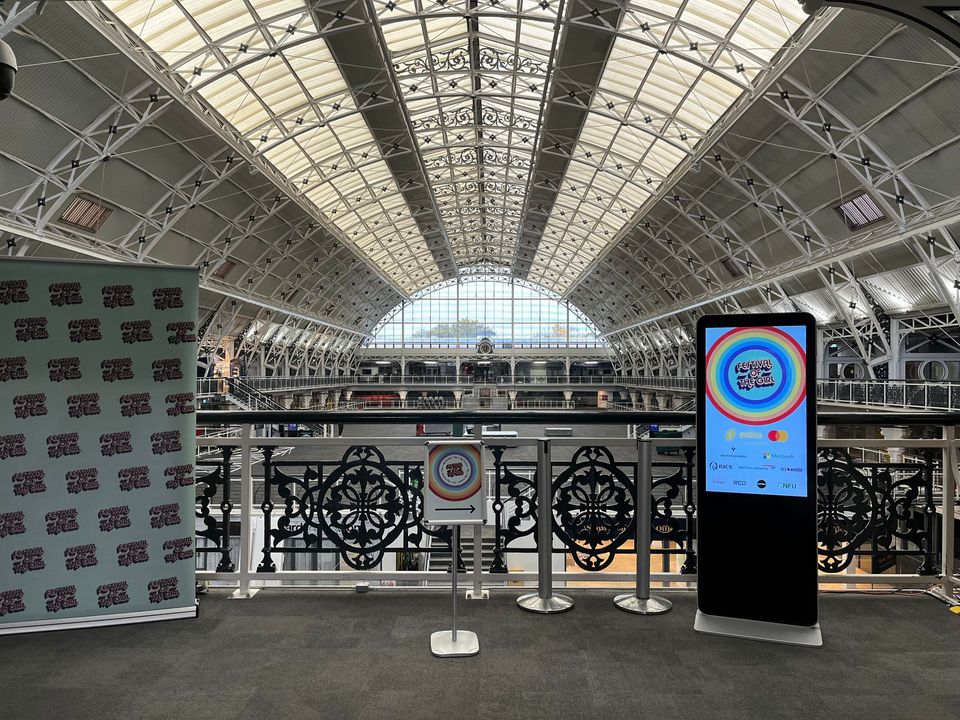
Families slowly trickled into the atrium space where we were based with small children who quietly surveyed our activities, clearly trying to decide which to try first. We helped them decide by explaining the activities and asking if they wanted to have a go. The RESILIENCE volunteers all brought their own expertise in biochemical engineering, chemistry, and cell biology, into play to explain the science they demonstrated.
Networking opportunity
The festival was an excellent networking opportunity. We directed many people to the RESILIENCE website for information about our benefits for educators and industry, using our QR code to help them access the standard free member pages and sign up as members.
A woman who is responsible for NHS training across the Greater London area wanted to know if she could purchase VR for training healthcare professionals. She tried the mixed reality serial dilution exercise and was blown away by it. People working with schools or as teachers were also interested in understanding what RESILIENCE skills was about. A retired maternity nurse tried the VR and thought it was an amazing idea to train healthcare professionals using this technology. We also met a general practitioner doctor and a veterinary doctor who were of a similar opinion as the nurse that VR as a training tool for healthcare professionals would be a valuable asset. Making arrangements for lab placements with A-level and undergraduate students we meet at STEM festivals is becoming a common occurrence.
We engaged in a number of discussions related to development of medicines that were at times quite advanced. We talked about sickle cell disease and CRISPR Cas9 gene editing tools as well as the use of viral vectors to deliver gene therapy. At the alginate gel making station, we received a comprehensive tutorial about the preparation and clinical application of alginate hydrogels from a little girl from Cape Town South Africa. She was a natural teacher. Her demeanour was calm and confident. She explained that alginate was from brown seaweed, that the structural components of alginate are similar to sugar molecules, and alginate gels are used to deliver medicines in the body. She even explained how alginate gelled. Her parents were nearby beaming with pride, and we let them know how impressed we were. Of course, we’d explained the activity to the little girl; she’d clearly listened carefully and then demonstrated her excellent science communication skills by tutoring us using her newly acquired knowledge.
VR - the star of the show…
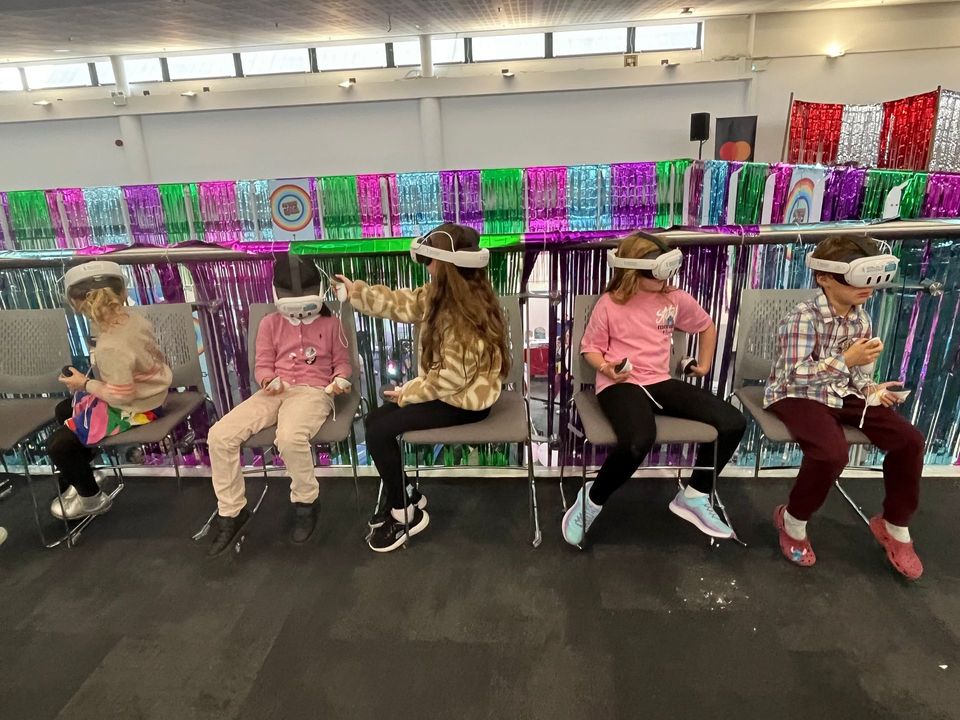
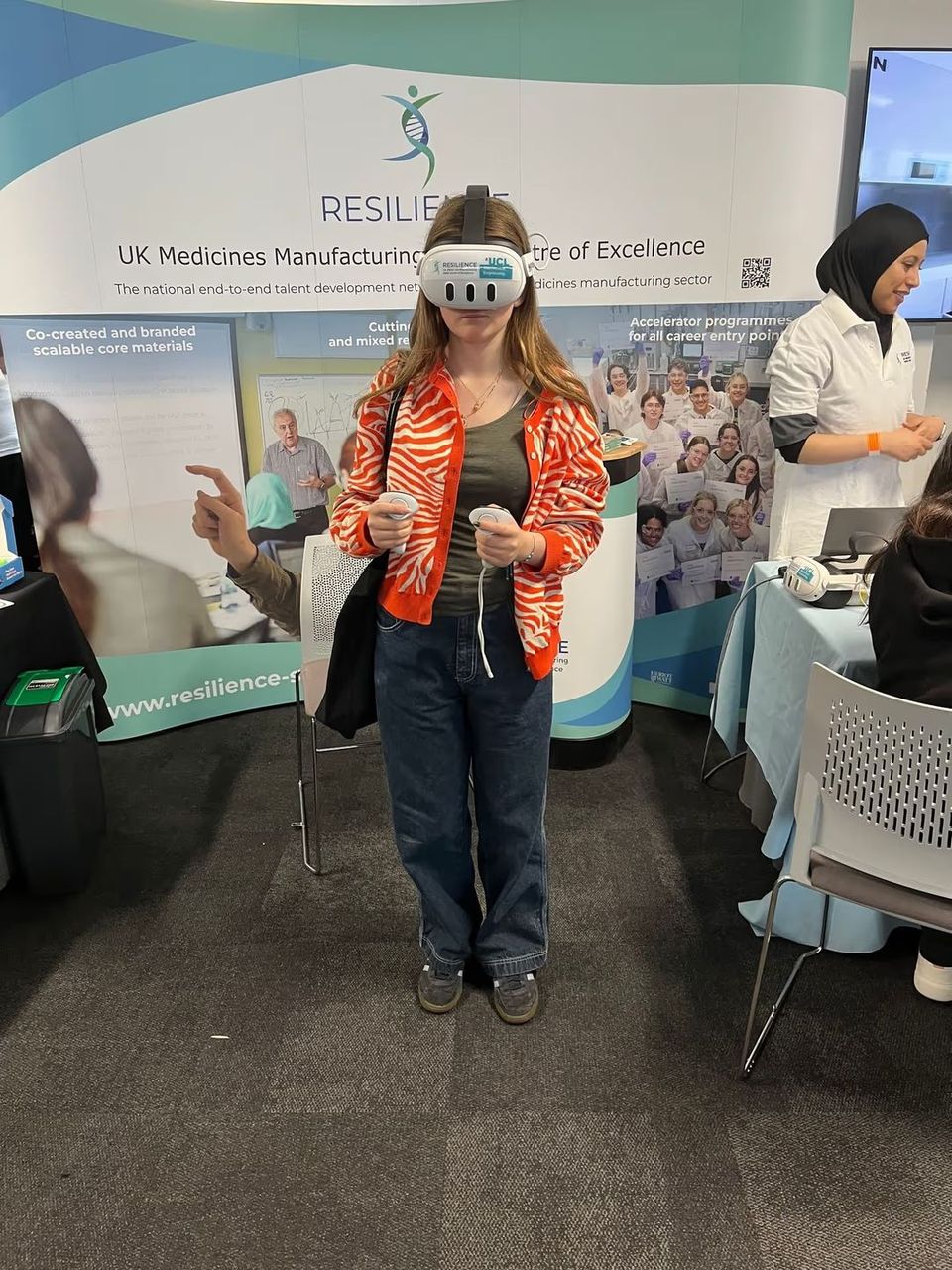
The virtual reality was a hit. Everyone who tried Proteus thought it was a trip. Children approached us in chaotic waves that were somewhat controlled by bemused and tired parents and guardians. We all enjoyed the game of matching parents to children after setting them up with VR. The parents were never far away but we’d often set up a child in VR, turn back to their parent and find that they had switched positions with another parent in the queue. The very small children were captivated by the Eclipse Creator (FourPlus Immersive) ‘On the Floor’ simulations. They could see their parents because the simulation was mixed reality but most didn’t understand that their parents couldn’t see the virtual objects they handled. It made for some interesting exchanges with children waving to their parents as they picked up virtual beakers and bottles.
…but not the only show in town
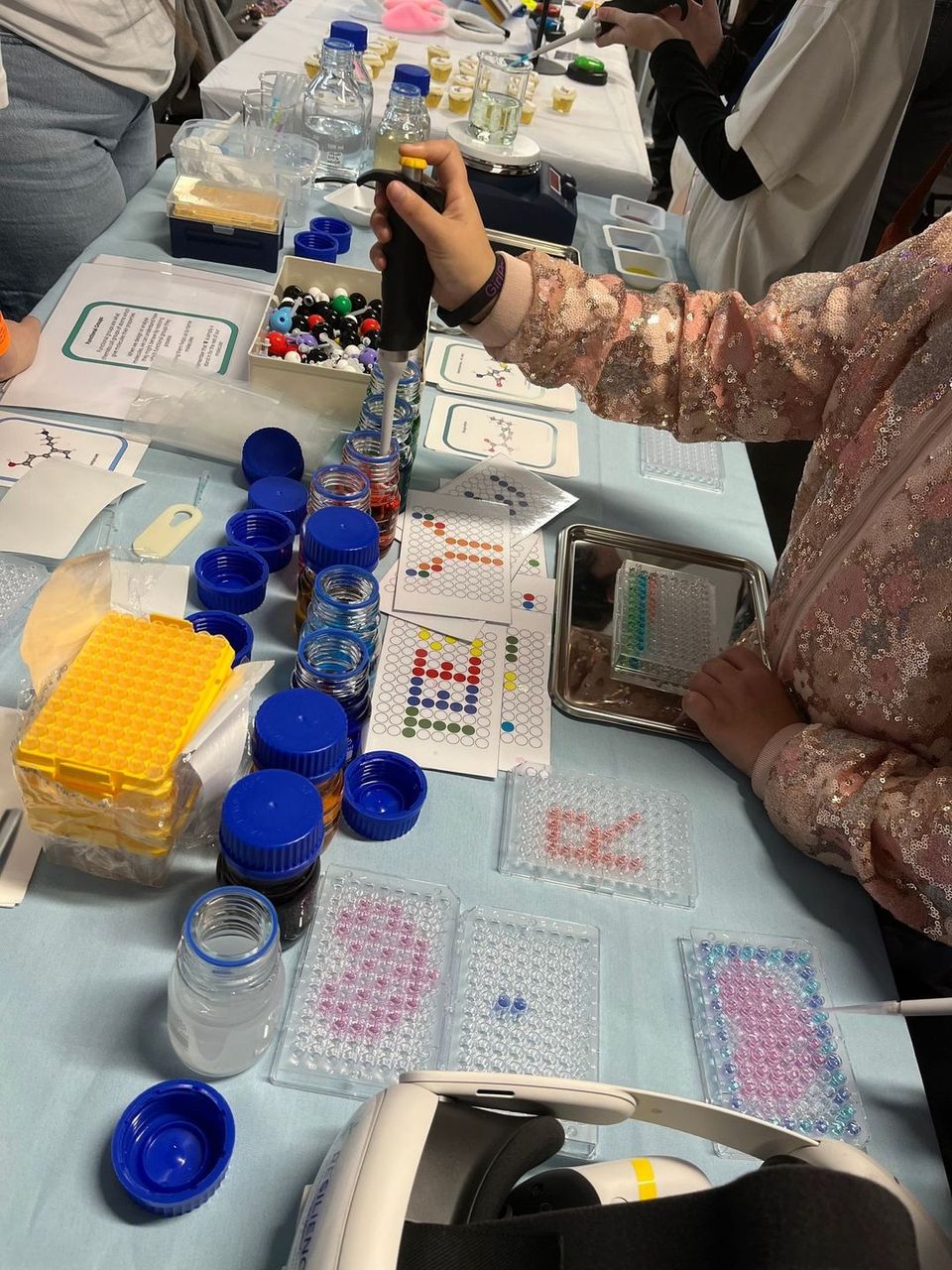
The children who were waiting for a turn on a VR headset tried the other activities and they naturally gravitated to alginate gel making after trying pipetting. They handled the gel making task well, using their newly acquired acuity for applying micropipettes to measure solution volumes. In hindsight, positioning the molecular modelling kit in between the pipetting and gel making activities was not such a great idea because it was only of passing interest. We thought the issue may be that most of the children who visited the RESILIENCE stand were more interested in the brightly coloured water and gel solutions that they could move around. Our artist’s corner was surprisingly popular. It seemed to provide a brief period of zen for both children and parents. A little girl chose to paint the microscope. I told her that she was the first to choose this image. She said that she had one at home, but it did not work.
The idea of educational kits was extended when a woman working at a nearby stand came over to the RESILIENCE stand to talk about the activities we offered. She asked me if the pipetting and gel making were supplied as kits. We told her they were not, but that it was an excellent idea. For the duration of the festival, parents asked us how they could source our outreach materials. We talked to them about our membership models for schools that included free educational materials, but they were really asking how they could purchase the materials, e.g., packs of the viral vector flash cards, for their children’s independent study. One parent commented that our stand was one of the most interactive and engaging at the festival. A woman who home schooled her children, took away some copies of our colouring book and told us she would use it as part of her lessons. Our flashcards were so popular, we needed to be careful they were not taken as ‘freebies’. Our red blood cell card went on a journey down the atrium and was returned by a security guard.
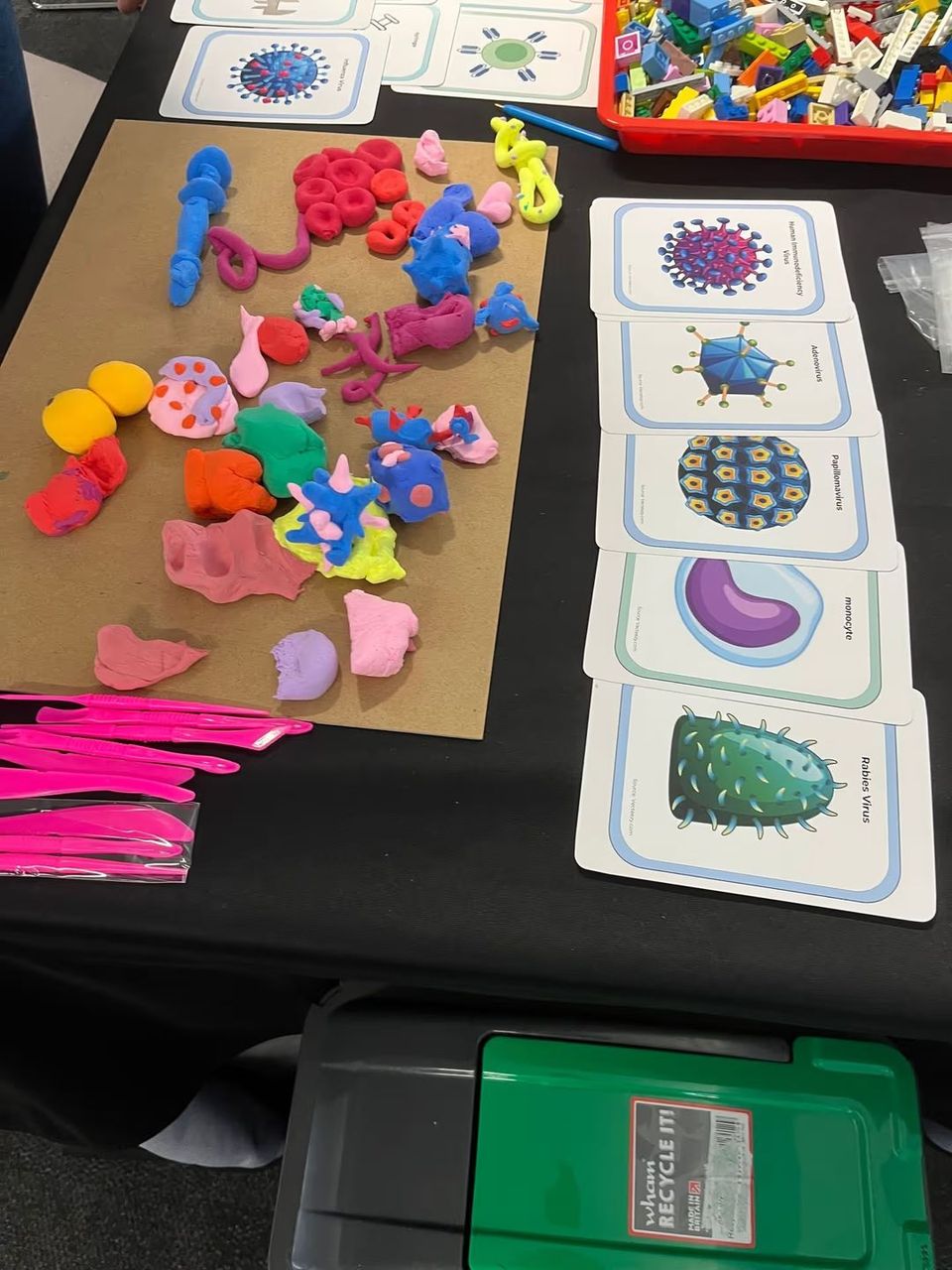
We were happy to welcome back parents and children we had met during last year’s FoTG. One woman told us she comes to FoTG every year and thinks it’s great for her children. Another woman visited the RESILIENCE stand last year with her older daughter and this year brought along her youngest daughter who had not attended previously but who wanted to try the VR because her older sister had raved on so much about how she loved it and how great it was. A young girl who had tried Proteus last year wanted to try it again as well as the Eclipse Creator outreach simulations. She was the daughter of one of the organisers and when we met at the end of the festival, I told her father that over the past two FoTG events that RESILIENCE had attended, she’d tried most of the elementary simulations, so I was sure she could handle the more advanced ones. A young girl visited our stand on the first day of the festival and returned on the second day with a group of friends. She told us that she really loved the art and the goodies (stickers, sweets and popcorn). One of her friends was physically disabled and only had the use of one hand but he tried the clay modelling and loved it so much he kept the model he’d made.
A real adventure
RESILIENCE had a real adventure during the 2025 FoTG, meeting and educating the future generation of scientists (including world class biochemical engineers) who will develop and maintain the UK medicines manufacturing industry. We will take on board the valuable learnings from this year’s festival to continue developing totally awesome STEM activities for future festivals.